
Australian Cricket Team has always been among the pioneers of the game of cricket. They have been heavyweights of the sport ever since the game was first played competitively. This is the team for which legends like Sir Donald Bradman, Dennis Lillee, Allan Border, Steve Waugh, Ricky Ponting and Adam Gilchrist have played all throughout these years. This is alos the nation that went 34 World Cup matches unbeaten, winning 3 consecutive trophies in the process. For a nation with such a rich history, the incidents that unfolded during the Cape Town Test, 2018, which is now more commonly referred to as “Sandpaper Gate” scandal, was quite simply a dent in their illustrious cricketing archive.
Here, I am looking to analyse one of the most shocking scandals to have hit international cricket, the consequences of the incidents, and the reason why it occured in the first place. As somebody who followed the whole process very closely, I believe that I can do a good job analysing most of the aspects involved in the entire event. Before we move on to the cause and effect, allow me to walk you through whatever happened that day, and the turmoil it followed.
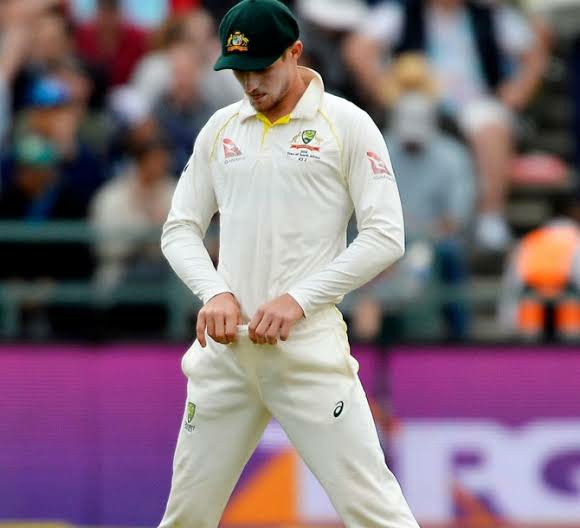
This was Australia in South Africa, 2018. The 4-match series was level going into the 3rd Test, with Australia comfortably winning the first test and South Africa drawing even with a fine win in the next. The third test was going comfortably in South Africa’s direction, having managed a comfortable lead of 267 by the end of the first innings. During the third day of the Test, while South Africa were batting their second innings, the TV Umpires spotted opener Cameron Bancroft appearing to rub the ball with a small yellow object. After Bancroft realised that he had been seen, he was again shown on the television coverage and on screens at the ground hiding the object in the front of his trousers. He was then approached by the umpires, and he showed them a dark microfibre sunglass pouch from his pocket. The umpires inspected the ball, and chose neither to offer the ball to the South African team to replace it if they wished, nor award them five penalty runs, the options available to the umpires under the laws of cricket. This indicated that the ball had not been altered in any noticeable way.
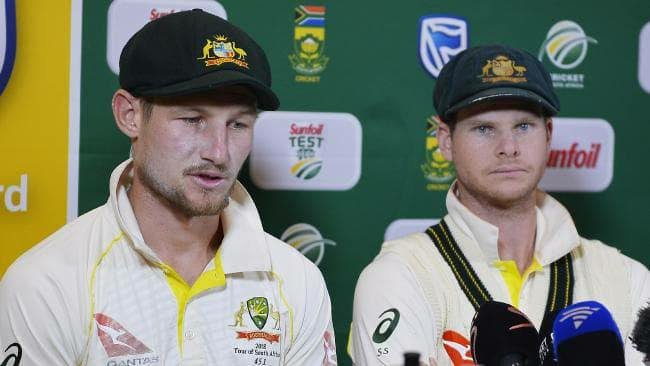
In the press conference at the end of day’s play, Australian captain Steve Smith, accompanied by Bancroft, admitted to the wrongdoing. He revealed the object to be a yellow adhesive tape that was roughened using dirt, but an investigation later revealed the object to be sandpaper, that cricketers use to maintain their bats. Additionally, he said that the plan was made by “the leadership group” (no names were mentioned) during the lunch break, admitting to his mistake. On further questioning by the media, Smith said that he wouldn’t be standing down as captain.
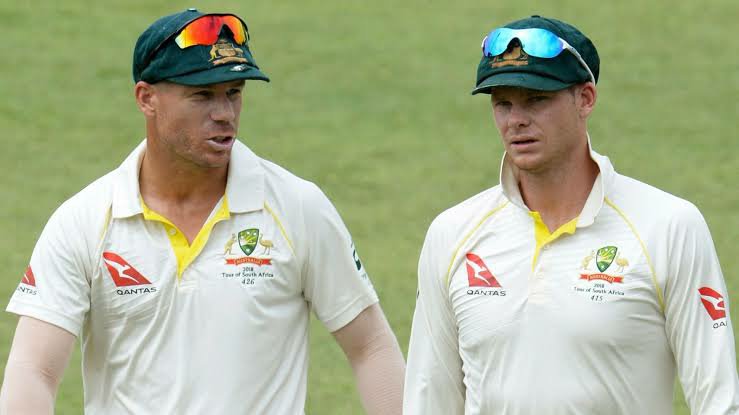
Cameron Bancroft was sanctioned by the match referee with a level 2 offence. Smith, vice-captain David Warner and Bancroft met with heavy backlash after the incident was publicised, and Cricket Australia president announced that Smith and Warner will stand down from their respective leadership positions for the remainder of the match, with wicket-keeper Tim Paine being given the captaincy role for the rest of the match. ICC later sanctioned them with demerit points (4 for Smith and 2 for Bancroft) and gave them a 1-match ban. It was announced after the match, that all 3 of them will be sent home after the 3rd Test, pending further investigation.
Cricket Australia, after a lengthy meeting, decided to sanction the 3 players with a breach of Code of Conduct, resulting in a ban from all Domestic and International cricket for 1 year (Smith and Warner) and 9 months (Bancroft). In addition, Smith’s name wouldn’t be eligible for captaincy until at least 12 months after he has served his suspension (Warner received a complete captaincy ban). In addition, coach Darren Lehmann also handed in his resignation from his post. But it didn’t stop there. Within nine months, Cricket Australia lost four board directors – Bob Every, Chairman David Peever, Tony Harrison and former test cricket captain Mark Taylor – and saw the resignation of longstanding CEO James Sutherland as well as two of his most senior executives, Ben Amarfio and Pat Howard. Everything was a big mess! The whole fiasco that unfolded was given the name “SANDPAPERGATE” by the media and fans.
Now before I say anything else, ball-tampering in itself is not a heinous crime in cricket. The maximum punishment ICC can give a player engaged in ball-tampering, is a fine of 75% of their match-fee and a ban for one match. This is an activity many players and captains have been doing for a while. What I believe to be the crux of this plot is the fact that Steve Smith, the Australian captain, went in front of the media and accepted that he cheated. After the Prime Minister, the captain of Australian Cricket Team has been viewed as the 2nd most important person in their country. Steve Smith, the batsman on course to becoming the next “Sir Donald Bradman” was seen as the face of Australia at that point in time. It is shattering to an entire nation of avid fans to see their idol, their country’s icon, be shattered the way it happened. For a proud cricketing nation, that was a blow to their faces.
Now onto another important point; why did the rest of the world meet this with such an uproar? Ball-tampering is not as big a crime as even throwing a match. Yet, the rest of the world united in criticism for the actions of the team. The reason behind this is, Australia as a cricket team has always been considered “schoolyard bullies”, in it that their cricketing culture always involved winning, no matter what the cost is. They were living in a bubble of their own creation. The line that they drew regarding what was acceptable, was the line they expected everybody to follow. But what they didn’t realise up until that day, was that what they termed as “acceptable”, others found it to be often “revolting”. So it is sufficient to say that the culture of cricket in Australia was always in question. The events that transpired were a mere catalyst to the events that followed, not the original cause of it all.
Needless to say, Australia required some sort of outside air, to tell them that it is ok not to win, but there are boundaries that shouldn’t be violated. It could have been any of the senior staff members, the coach, manager or even the president of the cricketing board. There was no voice of dissent when Warner came up with the idea, or when Smith approved it, simply because they didn’t even think twice about whether it should be done. In their mind, winning was the only option and they will exhaust any and all means to deliver on that. There was no confidence that the current team will deliver the results without an external push and that is what led to the fiasco that we all saw.
Now the Australian team find themselves without a coach, a captain, a vice-captain and 2 premier batsmen, who played all 3 formats of the game. As you can expect, they lost that test match, and of course the series in total, in a humiliating fashion. This problem extended beyond just a Test series. The world bought Australian Cricket Team on their knees. The Aussie public showed open outrage and dissent. The authorities hung their heads in shame. Their cricket team went from being one of the strongest teams, to having gaping holes to fill. It was a shambolic mess for the side, and their country, and everyone believed that they had to go a long way for fixing their mistakes. But how do the go about it? Where do they start?
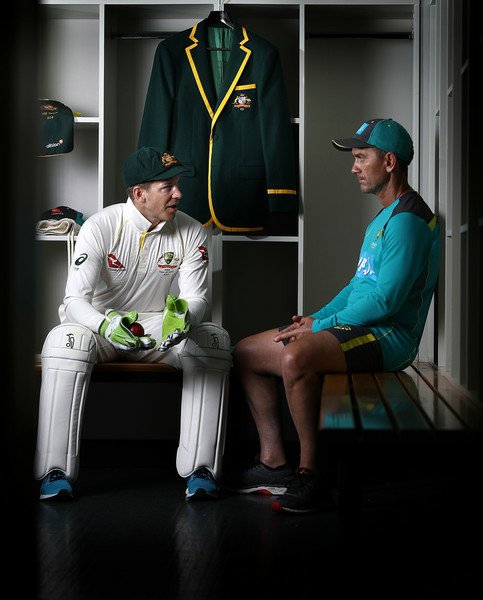
The team quickly realised that the culture that they have cultivated in their dressing room was toxic and simply unacceptable. They decided to change their view towards playing cricket, and to slowly win back the support of their fans. Under the leadership of newly-appointed head coach Justin Langer, the team began to rebuild their tram and their reputation. They stopped openly sledging on the field, placing emphasis on “banter” and that alone. As we can see if we watch “The Test” on Amazon Prime, there was an emphasis on changing the atmosphere around the players, and to instill a good sense of morality inside everyone. Cricket Australia prepared a report on how the entire cricket culture of the team needed changing. Out of the 42 proposed guidelines and changes, they have manged to implement 41 within a year from the incident.
Credit has to be given to the management team here, because such a strong response wouldn’t have occured in almost any other cricketing nation. Australia had the guts to take it all seriously, slash themselves down considerably, and rebuild from there. Not every team has the courage to give such strong punishments to high-profile players of the likes of Smith and Warner. The efforts put in by everybody involved, to win the fans back, to instill a permanent, long-lasting change and still not compromise on losing that winning edge, especially when the World Cup was looming, is extremely commendable.
Coach Justin Langer stepped up when the team was still in the aftermath stages, and led the team through their most difficult phases of recent times. He achieved a lot of positives whilst bringing about major changes to the way the game is played. Tim Paine, the captain of the team, was viewed as nothing but a substitute captain, and nobody in the cricketing world saw him as captaincy material. The team management backed him as the perfect choice to look after the team, and he didn’t disappoint. The way he captained the team, the attitude he showed on the pitch and the overall outlook that he projected was universally acclaimed. These two individuals have managed to turn the fortunes of the team around.
As for Smith and Warner, they came back into the team in time for the World Cup, after taking the mandated time off to focus on what went wrong. In the World Cup and the Ashes that followed, they managed very good performances, and displayed no signs of the incident affecting them. Good players always find a way to circumvent any problem that they face, and this is the best example of that. Compared to 2 years ago, these players now command a lot of respect for the way they play the game. Mistakes may happen, sometimes to the best of people. But what defines a person isn’t the mistake itself, but how they choose to react to it. Going from hanging their heads in shame, to holding their bats sky-high with pride, they have managed to set a good example on how to conduct yourself after you have seemingly lost everything you have worked towards achieving.
Regarding the whole team, there is visible change in the way they play the game, the way they are recieved, and the way people look at them in general. This team, through their sheer willpower and grit, have managed to make the best out of a god-awful situation and emerge like a phoenix from the “Ashes” (pun intended!). The pressure was more than enough to bury them under it, but they proved themselves stronger than all of that. Overall, this entire story is nothing but a success story, one that highlights the importance of sportsmanship, and one that teaches us that we can bounce back from anything, if we are willing enough to do it.

 Cricket Unlimited