
Test cricket marks the beginning of cricket as a sport. When the first test match was played in 1877, nobody could have predicted that the game would attain this much fan-fare and popularity. Over the course of history, there have been many players who have left a mark of this great game with their skill, ability, talent and dedication. So many players, who’s names have come up in this blog so many times, have put in consistent displays worthy of applause. This post will not address the career of anybody. The beauty of cricket is that you can etch yourself into the history books of the sport, even if you limit your magnanimous display to a day! Players who might see their names on this list may not even be close to being considered “great”, but they have has their moments of brilliance.
The following compilation is that of the Greatest Test Match Innings, in my opinion. Some were played out during my lifetime, while others I have only heard about or viewed the highlights of. Regardless, they have certainly resonated with the cricket-lovers across the globe, and impacted the way we view this format of the game. Keep in mind that this list is highly opinionated, much like any of my other posts, so do let me know if you think any other innings deserves to be mentioned. Also, I have taken the liberty of ranking innings I have viewed live ahead of the ones that I have seen as highlights. The knocks that feature in the lower half may deserve to be bumped up a few places, but the thrill of watching the other innings can never be replaced. Anyway, let’s get started……
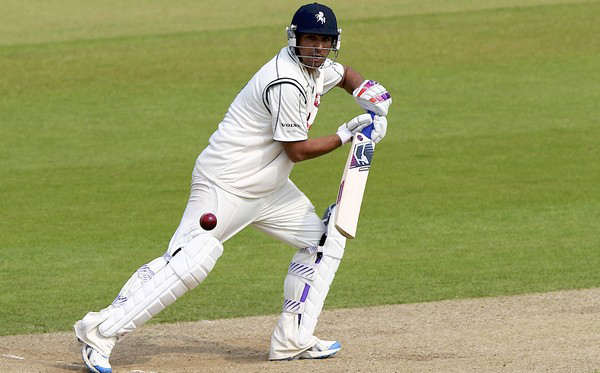
Honourable Mention: Azhar Mahmood, 132 vs South Africa, Durban, 1997-98
There are players that achieve longevity in their careers, and go on to have illustrious careers. Azhar Mahmood isn’t such a player. But he has a golden moment in the southern sun that the cricketing world cannot easily forget. Pakistan face South Africa in Durban for the second test of the series, having drawn the first game. Batting first on a bowling-friendly attack, Pakistan were quickly reduced to 85/5, as Mahmood walked in to bat. South Africa has their oppenents reeling, as the fiery pace quartet of Allan Donald, Shaun Pollock, Fanie de Villiers and Lance Klusener were relentlessly pursuing wickets. In a fearsome counterattack, Mahmood took them on, with only the batting tail for support. He scored 96 runs in boundaries in what can be called a magnificent effort, lifting the hopes of his team-mates in the dug-out. At a time, 150 looked a hard total to reach. But Mahmood’s stupendous innings meant that Pakistan made a respectable total of 259. The reason why this innings is as extraordinary as it is, is because it came at a very tough time for the team, playing the first day of a tough away test, against the best (arguably) bowling attack of the time. Mahmood had almost no support from any other batsman, and the PQI (Pitch Quality Index) was 39, indicating it was a bowler-centric pitch. If one takes away Mahmood’s innings, the RpW (Runs per Wicket) is a very low 20.7. Mahmood added 132 runs with the late-order batsmen, almost all by himself. Some players may not have what it takes to be considered a legend, but on their day, they might put forth performances that will eclipse even the greatest. This innings off the bat of Azhar Mahmood deserves praise, as it is one any legendary batsman would have proudly owned. His valiant performance helped his team to a good 1st innings total, which ultimately shaped the outcome of the match in their favour. Mushtaq Ahmed may have walked home with the man-of-the-match title, but it was Mahmood that played the game of his life!
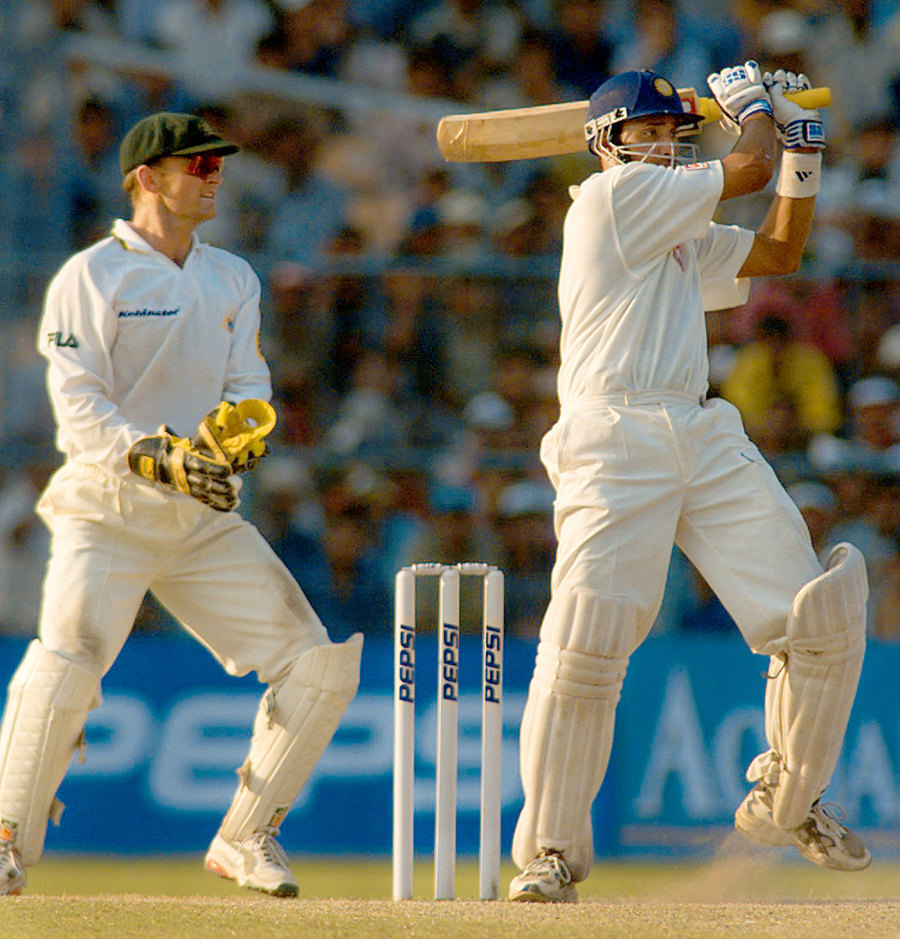
5) V.V.S Laxman, 281 vs Australia, Kolkata, 2000-01
This is perhaps the most memorable test match in the history of Indian cricket. This test match is often described as the turning point of cricket in India. Australia, under the captaincy of Steve Waugh, went 16 matches unbeaten prior to this game. He came to India with the ambition of being the first Australian captain to win a test series in India, and he had a brilliant team that was more than capable of delivering the results. They routed hosts India in the first test at the Wankhede, and were is great spirits coming into the second. India looked bent out of shape, and in pole position to lose the series in a humiliating fashion. Up until the first session on day 3, this looked like another landslide victory going the way of the Aussies. Australia posted a good total of 445 in their first innings, courtesy of a Steve Waugh century. India, in reply, bundled out for 171, the game now almost definitely out of their hands. Waugh enforced the follow-on, going in for the kill. This decision, perfect at 11 AM on March the 13th, backfired and turned into a disastrous one by 4 PM two days later. It single-handedly changed captains’ views on follow-ons forever. What followed that decision was an innings of pure class, endurance and grit. V.V.S Laxman, who got promoted up the order to No.3, owing to a good first innings performance, came in when the score was 52/1. He departed having pushed his team up to a total of 608. India declared at 657/7. What started off with India trailing by 274 runs ended with them having posted a lead of 384. Laxman’s partnership with Rahul Dravid (180) for the 5th wicket is still regarded among the best partnerships the game has seen. Laxman didn’t just play a defensive, match-saving innings. He attacked the powerful Australian bowling quartet with disdain and collected 44 boundaries in total. He led his team to only the 3rd win in Test cricket after being asked to follow on, and a series win afterwards. That match, and Laxman’s innings were both an epoch in cricket history. The only reason it doesn’t see itself being placed higher on this list is because the pitch was a batting friendly one to begin with, and Laxman had Dravid for support as opposed to the other innings you might see here. That, however, takes nothing away from the quality of this knock and the game could use more of this in the coming future!
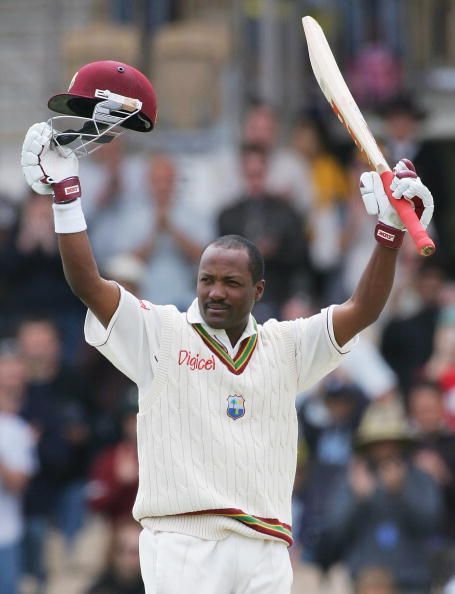
4) Brian Lara, 153* vs Australia, Bridgetown, 1998-99
Another innings that I have only viewed the highlights of, Lara’s innings is one described by many cricket experts as the best innings the game has ever seen. Such is the quality of this knock and the batsman who played it. The series was tied at 1-1. The pitch was batting-friendly initially. Australia scored 490, courtesy of centuries from Steve Waugh and Ricky Ponting, and West Indies replied with 329, having recovered from 98 for 6. Then Courtney Walsh, helped by Curtly Ambrose and Pedro Collins, dismissed Australia for 146, which meant that West Indies had to score 308 to win. The pitch was giving a lot of assistance to the bowlers as the match progressed, and it was visible, as West Indies slipped to 105/5 after an opening partnership of 72. Lara, who had Jimmy Adams for support, added 133 runs for the 6th wicket, Adams contributing just 38 runs. 3 wickets fell in quick succession, Windies still 60 runs sort of their target, and Lara had only Ambrose and Walsh for support. Ambrose made 12 off the 39 balls he faces, with Lara chipping away on the runs as and when he got the opportunity. He gave minimal strike to Ambrose and began pushing his side closer to the target. When the last batsman Walsh walked in, the target was just 6 runs, but Walsh had to face 5 balls for West Indies to remain in the game. A nerve-wrecking over from Glenn McGrath later, Lara took back the strike, went about his business, and guided his team to glory. Against a relentless Australian attack, Lara achieved what many felt was impossible. This is the best example of the class with which Brian Lara played the game. He is widely regarded by many as one of the greatest test-cricket players, and this is a classic example of why. He held his nerve do deliver an important win against the then-number 1 team. Lara had fair to middling support during his innings. The PQI was 52, indicating a reasonably good pitch for batting, which might be the only reason this knock finds itself a little lower on this list than I previously had it. Barring Australia’s second innings of 146, the other innings were in excess of 300. Lara added 62 invaluable runs with the last two batsmen. He thrillingly took on the challenge after a watchful start, hitting the spinners to distraction, sledging McGrath with impunity, shielding the tail as wickets tumbled around him, hitting the last nine runs himself with the hapless but heroic Courtney Walsh at the other end. A truly one-of-a-kind innings that deserve a lot of praise!
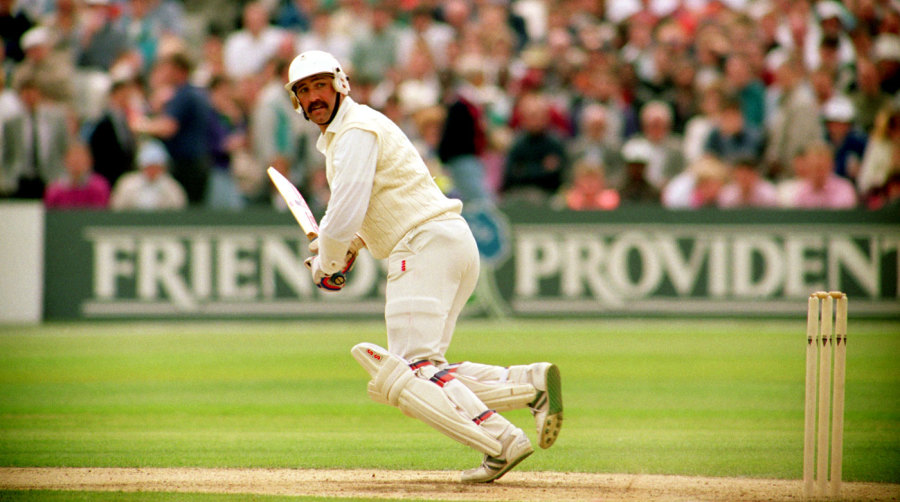
3) Graham Gooch, 154* v West Indies, Headingley, 1991
This is Wisden Cricket Almanack’s pick for the best-ever test innings, by a considerable margin no less! According tho their scoring system, this innings is over 50 points ahead of it’s nearest competition. That’s the difficulty level that Graham Gooch excelled in. Headingley is nothing short of a haven for amazing and nail-biting cricket matches (more on that later), and this match was one of pure quality, owing to Gooch’s resilient display. The pitch has historically been a bowler’s paradise, and this test wasn’t looking any less of a hunting ground for the feared West Indies bowling attack. The two low first-innings totals meant that England gained a surprising lead of 25. In England’s second innings Curtly Ambrose struck immediately, dismissing Mike Atherton, Graeme Hick and Allan Lamb, and England slipped to 38 for 3. Even 150 seemed distant. But Gooch, the then-England captain was undeterred in his resolve, and found handy batting partners in the no.4 and no.7 batsmen (Mark Ramprakash and Derek Pringle respectively). After Pringle’s dismissal, the score was 222, and it was only a matter of time before the innings was wrapped-up. Gooch ended up carrying the bat, on his way to a solid score of 154*, taking England to a respectable total of 252. The target set for West Indies was 278, which the relatively mediocre England bowlers managed to defend. Gooch’s brilliance alone helped England seize the win, and gain a massive head-start in the series. Against one of the most feared attacks of all time, featuring Curtly Ambrose, Courtney Walsh, Malcolm Marshall and Patrick Patterson, Gooch carried his bat through for a majestic 154, making over 60% of England’s total. He faced 331 balls, almost all against the four pace giants and with no laws protecting the batsman from short-pitched bowling. The value of his innings is enhanced by the fact that an average bowling attack of Devon Malcolm, Steve Watkin, Phil DeFreitas and Derek Pringle dismissed a strong West Indian team for 173 and 162. The next highest score in England’s second innings was 27. The Pitch Quality Index (PQI) was 34, indicating the challenging conditions. From 124 for 6, Gooch more than doubled England’s score. It helped to set up England’s first home win against the West Indies for 22 years, and what those present remember above all is the mastery: on a tricky surface and with wickets falling all around him, Gooch pulled and drove with the bullish insouciance of a batsman facing club bowlers on a Southend road. An extremely remarkable innings by any measure of the term!
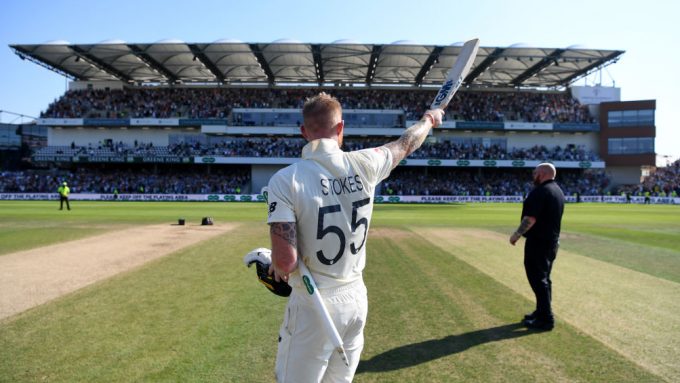
2) Ben Stokes, 135* vs Australia, Headingley 2019
Ah, Headingly, you never fail to impress! The 1981 Ashes featured a historic encounter, which resulted in only the 2nd ever victory after being asked to follow-on. England finished as victors in that game, and that level of exhilaration was expected to remain unmatched. Enter Ben Stokes! Fresh off a World Cup campaign that he ended up winning, courtesy another brilliant knock in a nerve-wrecking finals, the England team enter the Ashes 2019 against a strong Australian side. Having badly lost the first test, it looked like the Ashes would be in jeopardy for the English. A draw in the 2nd test at Lord’s kept the dream alive. The third test at Leed’s promised a lot to offer, and England wanted badly to bounce back. Australia were all=out for 179 in their first innings. In reply, England were crushed by the might of the Australian pace attack, only managing a paltry 67. The Aussies managed to take a resounding lead of 358 by the end of their second innings, in which they scored 246. The Englishmen got off to a bad start, but recovered because of a good partnership between Joe Denly and Joe Root. When Stokes walked in, the score was 141/3, and after Root was dismissed, he managed to stitch a partnership with Jonny Bairstow. But Josh Hazelwood got the breakthrough in the form of Bairstow’s wicket, the team still 117 runs away from target. After this, all hell broke loose, and England were reduced to 286/9, as the no.11 Jack Leach walked in to partner Stokes. Nobody gave England a chance in hell of winning this match. The Ashes had almost slipped away for good. Ben Stokes, however, had other ideas. Minimising strike given to Leach, he started going after the potent Australian bowling, and accelerated like a possessed player! He played a knock that is frame-worthy in any of the history books, and reignited the Test flame in any viewer who may have thought that this format deserves to die. He had every fan, even the neutral ones, at the edge of their seats, as he swatted the ball to all parts of the ground. He kept the series alive and well, purely using his outrageous ability to perform under pressure. Stokes’s innings was a Test knock, a one-day innings and a T20 thrash all in one. At one stage in England’s chase of 359, he was on 2 off 66 balls: an extraordinary feat of restraint for a player who possesses every shot in the book. Then, with Bairstow for company he moved through the gears to whittle the target down to size. Then, with 73 runs required and only Jack Leach for company, he let loose. His last 64 runs came off just 34 balls and contained some of the most audacious, brilliant shot-making ever seen on an English cricket ground. A day that began full of possibility flipped and flopped and flipped again on the balance of probability and ended with an air of impossibility as England kept the Ashes alive, thanks to Stokes’ match-winning century. He has, without a shadow of a doubt, proven himself to be a once-in-a-generation player, capable of turning any match around. Take a bow, Ben Stokes!
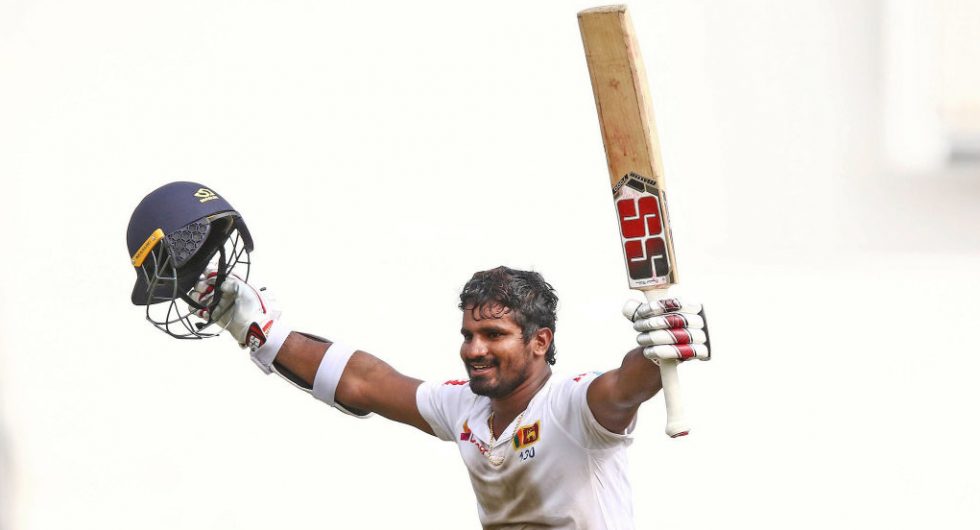
1) Kusal Perera, 153* vs South Africa, Durban 2018-19
As we approach the final entry, I have to say this. I was extremely fortunate to watch this match live. Sri Lanka were heavy underdogs in both this match and the series as a whole. The first test in Durban was expected to be a fairly straightforward win for the Proteas. They had a ferocious bowling attack consisting of Dale Steyn, Vernon Philander, Kagiso Rabada and Keshav Maharaj. After a dismal 1st innings performance by the Sri Lankan batsmen, nobody expected the team to chase down a competitive total of 304 in away conditions. With wickets tumbling around him, Kusal Perera was the man Sri Lanka had their hopes on, and that man went on to create a masterpiece that even the best Hollywood script-writers couldn’t have crafted. Set 304 to win by South Africa, a valiant Sri Lankan effort appeared to have ended in failure at 226-9. But Perera had other ideas. With only Vishwa Fernando for company, Perera feasted on the diet of bouncers served up to him, pulling hard to the leg-side, despatching the spinner (fleetingly, and attractively, sans helmet), scampering twos, gradually chipping away at the target until South Africa wilted under the pressure. His partner Fernando, who hasn’t managed to score beyond 35 in any format of professional cricket, valiantly aided him, but this match and the outcome was all Perera-magic. Perhaps what stands out most from his innings is how quickly he changed the momentum of the game. One moment, South Africa were just one wicket away from a seemingly inevitable victory, and the next Faf du Plessis is in full defensive mode, desperately trying to protect his bowlers from Perera’s controlled onslaught. The tone was set nine balls after Sri Lanka’s No.11 Fernando came to the crease when Perera advanced down the wicket to left-arm spinner Keshav Maharaj and hacked him into cow corner. Two overs later, Perera reached his hundred, just his second in Test cricket. His teammates stood up to express their admiration, but the job was far from done. Once he passed 100, his farming of the strike was excellent – Fernando faced just 13 of the last 63 balls – and once du Plessis had retreated all of his fielders, with the exception of a solitary slip, to the boundary, Perera’s game plan was clear. It didn’t matter that there were eight fielders on the fence, when the ball was in the slot, Perera backed himself to clear the ropes every time. He smacked 27 runs first three overs of the second new ball, religiously sticking to his formula. That onslaught put Sri Lanka within 14 runs of victory and Perera stayed true to his method. If there were nerves, he didn’t show them. He deposited Steyn over deep mid-wicket and then jammed out a quick single to put his side within six runs of the target. Two leg byes and a guide down to the third-man boundary later and Perera had almost single-handedly completed one of the greatest and most unexpected run chases in the history of the game against a genuinely outstanding attack. This outstanding piece of cricketing history is now 1st on the updated Wisden’s Golden Willow 25, beating Gooch’s effort. Stokes may have played a knock strikingly similar, but the away conditions, and the fact that he led Sri Lanka to the first test series victory by an Asian team in South Africa is in itself a mark of greatness that tips the scales in Perera’s favour. His is the one innings on this list that seemed to come from absolutely nowhere: a lightning bolt from a player whose average of 29 to that point (and just nine since) offered no portent whatsoever of the outrageous guts and sumptuous skill that would thoroughly violate our expectations of Test cricket and win a landmark series as a result. If that’s not the very definition of the greatest innings of all time, I don’t know what is!
That brings us to the end of this list. As a cricket fan, it was more than a pleasure re-living these memories. I will make sure to try and incorporate innings from other formats as well, in upcoming posts of course! Until then, let us marvel at these legendary moments of the sport!

 Cricket Unlimited